
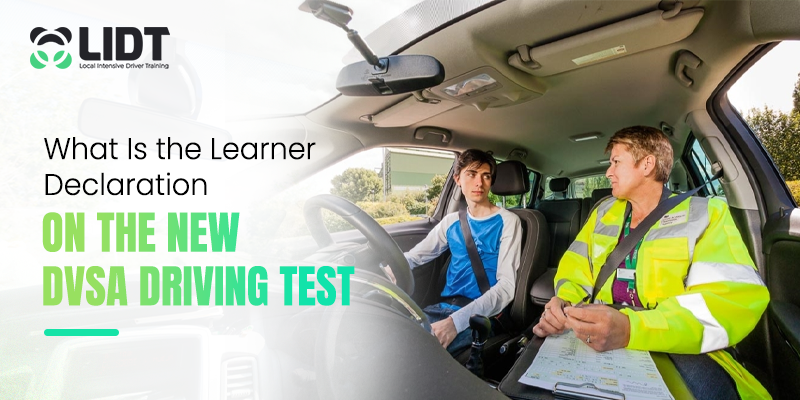
Learning to drive in the UK has changed significantly in recent years. The DVSA has introduced stricter rules, updated compliance checks, and improved learner accountability to make roads safer for everyone. One of the biggest changes introduced under the updated testing process is the learner declaration.
Many learner drivers hear about this form shortly before their practical test and feel confused about what it actually means. In reality, the learner declaration plays an important role in confirming that a candidate is genuinely prepared and legally eligible to take the test.
Understanding this declaration properly can help learners avoid unnecessary delays, failed bookings, or test cancellations.
What Is the Learner Declaration?
The learner declaration is an official confirmation that learner drivers must agree to before taking their driving test. It confirms that the candidate understands the DVSA rules, meets legal driving requirements, and is properly prepared for the test.
The declaration usually includes confirmations such as:
- Completed enough driving practice
- Understands DVSA test rules
- Meets legal eyesight standards
- Medically fit to drive
- Uses valid booking methods
- Understands cancellation policies
Under the updated 2026 DVSA system, this process has become more important as the DVSA works to reduce test misuse and improve pass-readiness standards.
For learners preparing through a one-week driving course, instructors now spend additional time explaining these compliance checks before the test date.
Why Has the DVSA Introduced the Learner Declaration?
The DVSA introduced the learner declaration to improve safety and reduce the number of unprepared driving test attempts.
In recent years, driving test waiting times have increased dramatically across the UK. According to DVSA reports, practical driving test backlogs exceeded 500,000 bookings during peak demand periods. Many learners were booking tests before they were actually ready.
This created several problems:
- Higher failure rates
- Longer waiting times
- More cancelled tests
- Increased pressure on examiners
The learner declaration encourages candidates to book responsibly and honestly.
When learners join a professional fast-track driving course in London, instructors often assess readiness carefully before recommending a practical test booking. This helps reduce avoidable failures.
What Does the Learner Declaration Include?
The learner declaration focuses on responsibility, safety, and legal compliance.
Confirmation of Test Readiness
Learners must confirm they are genuinely prepared for the driving test. This includes:
- Understanding road signs
- Safe manoeuvres
- Independent driving ability
- Hazard awareness
- Parking control
- Junction safety
For example, a learner who still struggles with roundabouts or lane discipline may not yet be ready for a full DVSA practical test.
Eyesight and Medical Requirements
Drivers must confirm they meet legal eyesight standards. You must be able to read a number plate from the required distance. If you fail the eyesight check during the test, the test ends immediately.
The declaration also confirms there are no medical conditions affecting safe driving unless already reported properly.
Honest Booking Practices
The DVSA has also targeted unofficial reselling systems and fraudulent bookings.
The learner declaration helps confirm that the candidate is using legitimate booking methods and understands the official process.
This matters especially in large cities, where demand for test slots is high. Learners enrolled in a fast-track driving course in London often rely on structured booking assistance from approved driving schools instead of risky third-party services.
How the New Rules Affect Learners
The updated DVSA system places greater responsibility on learner drivers and instructors alike.
More Focus on Preparedness
Driving tests are no longer treated casually. Examiners expect learners to demonstrate safe, confident, and independent driving throughout the assessment.
According to UK government driving statistics, the national practical driving test pass rate remains below 50% in many regions. This shows how important proper preparation has become.
Professional training now matters more than ever. A structured one-week driving course can help learners build concentrated experience quickly, especially when combined with instructor feedback and mock tests.
Stronger Instructor Accountability
Driving instructors are also expected to ensure learners are genuinely test-ready before encouraging bookings. At LIDT, our instructors use tracking systems, progress reports, and readiness scoring to support this process.
Features such as:
- GPS lesson tracking
- DVSA syllabus monitoring
- Reflective lesson logs
- Readiness scoring
All this helps learners understand their strengths and weaknesses clearly before taking the DVSA practical test.
Wrapping Up
The DVSA wants learners to take tests only when they are properly trained, legally compliant, and fully prepared for real-world driving conditions. This approach improves road safety while reducing unnecessary test delays and failures.
At LIDT, we are London’s most-reviewed intensive driving school, offering fully compliant training under the latest 2026 DVSA rules, with over 100 approved instructors.
Book your consultation with LIDT today and take the next step towards passing with confidence and driving independently.
FAQs
1. What is the learner declaration for the DVSA driving test?
It is a confirmation that the learner meets legal, medical, and readiness requirements before taking the practical driving test.
2. Is the learner declaration mandatory?
Yes. Learners must agree to the declaration before completing the driving test process.
3. Can I fail the DVSA practical test because of eyesight issues?
Yes. If you cannot meet the legal eyesight requirement, the test may end immediately.
4. Does a one-week driving course help with test preparation?
Yes. A one-week driving course provides concentrated learning and can improve confidence before the test.